

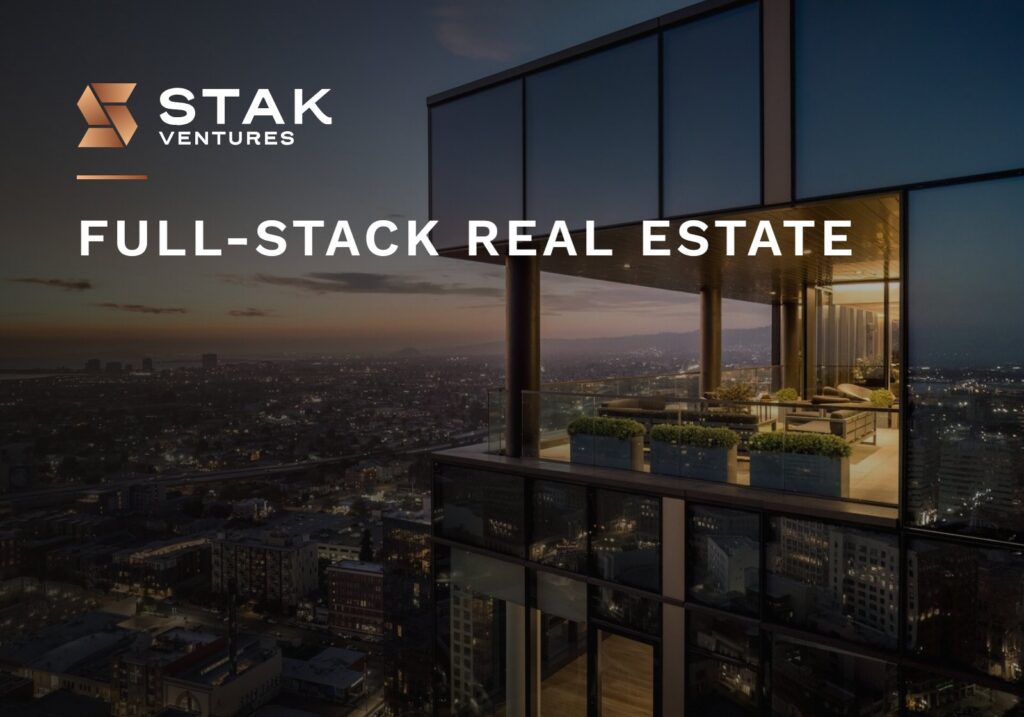
Picture a founder who signs an office lease, then books parking from a second vendor, finds housing through a third, and juggles a fourth app for building access. Each piece works on its own. However, nothing talks to anything else, and every handoff costs time. That friction is exactly the problem full stack real estate sets out to solve.
Ecosystems outperform single-asset real estate because connected space, technology and community compound each other. When housing, offices, amenities, mobility and building systems share one platform, every new service makes the others more useful. As a result, owners capture more value, residents and tenants stay longer, and founders gain a live market to build for.
Key takeaways
- A single building sells square footage, while an ecosystem sells a connected way of living and working.
- STAK Ventures invests on the thesis that ecosystems are more valuable than products.
- Live, Work, Play, Go and Tech create value only when they share data, access and community.
- Proptech founders win by building for the whole stack rather than one isolated workflow.
What full stack real estate actually means
Full stack real estate is an integrated ecosystem of space, technology and community run as one platform. Instead of treating a building as a box with tenants inside, the model treats it as infrastructure for daily life. Therefore, the apartment, the desk, the amenity and the commute all belong to the same system.
This is the core idea behind STAK Ventures, the venture and technology arm of Behring Capital. Behring Capital is a vertically integrated real estate development and investment platform. Because it develops, owns and operates, it can connect layers that most owners leave separate.
In practice, the full stack real estate model at STAK Ventures covers five layers. Live means residences. Work means offices and coworking. Play means amenities. Go means parking and transit access. Finally, Tech is the intelligent layer that ties the other four together.
Why single assets leave value on the table
A single asset competes on price per square foot, so its value stops at the lease line. An office tower can be beautiful and still feel disconnected from where people live, eat and travel. Meanwhile, each vendor inside it captures a thin slice of the relationship.
An ecosystem changes that math, and the STAK Accelerator is built around it. For example, a resident who also works on site and parks in the same garage has three reasons to stay. In addition, every interaction produces signals that help operators improve service across the whole campus.
Transit sharpens the advantage further. Planners have long argued for transit-oriented development around BART stations because density near rail supports housing, jobs and retail together. A connected campus is the private-sector expression of that same logic, and it rewards owners who think in systems rather than parcels.
How Live, Work, Play and Go connect
The pillars connect through shared access, shared data and shared community. On the 1900 Broadway campus, the STAK app links apartment, amenity, coworking and mobility bookings. Residents of 1900 Broadway apartments reserve amenity spaces through the same tool they use for everything else.
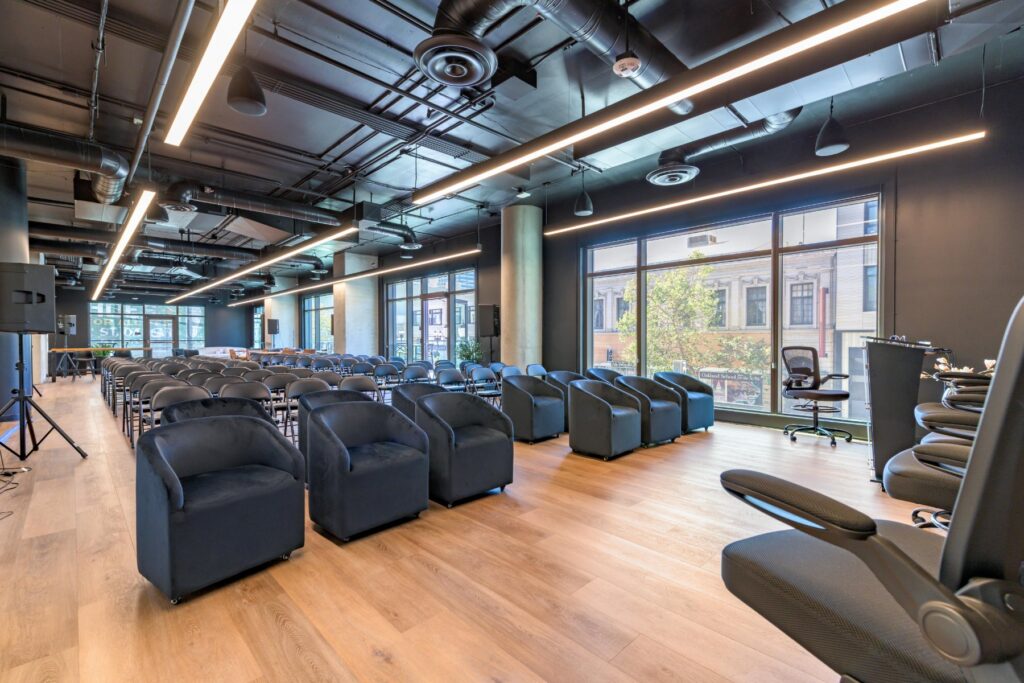
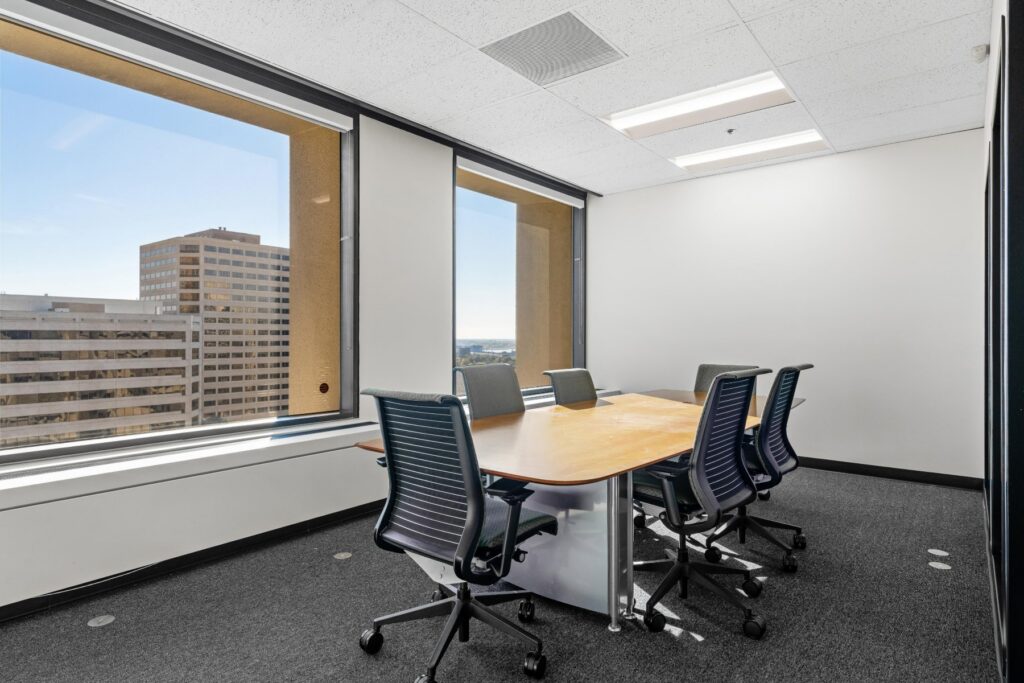
Work sits close to home. Over 50,000 square feet of STAK Space coworking, private offices and dedicated desks occupies floors two and three of 1900 Broadway. Residents of the building receive discounted coworking access, so the walk to work can be an elevator ride.
Go completes the loop. The campus sits on the 19th St./Oakland BART station, and the broader mobility layer includes parking, BART access and robotaxi access. Consequently, a person can live, work, unwind and travel without leaving the network.
Building software, hardware or services for connected buildings? The STAK Accelerator puts your product inside a working ecosystem.
What the ecosystem thesis means for proptech founders
Proptech founders should design for the whole stack, because buyers increasingly want connected outcomes. A tool that solves one workflow in one building is easy to replace. By contrast, a product that improves access, operations and experience across many spaces becomes infrastructure.
The STAK Site App shows what full stack real estate looks like at scale. It empowers over 1.2 million square feet of real estate with smart access control, AI-powered chatbots and customized AI applications for operations. That footprint gives founders a realistic picture of how integrated software behaves in occupied buildings.
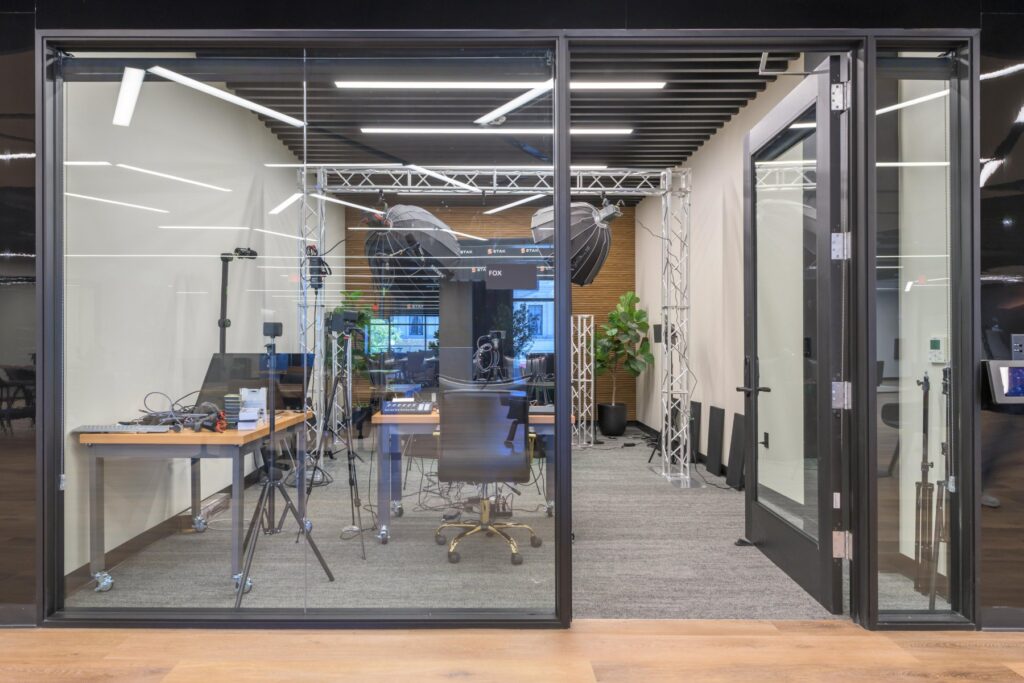
Founders also need a place to prove it. The STAK Accelerator operates three Uptown Oakland hubs at 1900 Broadway, 1950 Franklin and 415 20th. Founders gain access to capital, technology integrations and premium workspaces, so they can test ideas where the stack already runs.
Where integration creates defensible value
Integration creates defensible value when switching away would break several things at once. A resident app that also handles parking, access and coworking is far stickier than any single feature. Therefore, the moat lives in the connections, not in the individual product.
STAK Ventures focuses on the categories that build those connections. They include real estate technology, mobility and transportation, smart building systems, community platforms, sustainable living technologies and full-stack ecosystem enablers. You can see how founders benefit in the advantages STAK offers to startups.
The lesson for builders is direct, and the STAK Accelerator exists to support it. Start with a sharp wedge, then earn the right to connect adjacent layers. Above all, measure success by how much more valuable the ecosystem becomes once your product joins it. That is the standard full stack real estate sets for every company that plugs into it.
Next step: build inside the ecosystem
The founders who shape full stack real estate will be the ones who test inside it early. If your company serves residents, tenants, operators or commuters, the STAK Accelerator gives you capital access, integrations and space on a live campus. Explore the program and see where your product fits.
Frequently asked questions
What is full stack real estate?
It is a model that runs residences, offices, amenities, mobility and building technology as one integrated platform. STAK Ventures uses the term to describe the ecosystem of space, technology and community it builds and invests in.
Do I need a full stack real estate product to join the STAK Accelerator?
Not necessarily. The accelerator supports companies of every size, and its focus areas include mobility, smart buildings, community platforms and sustainable living technology, among others. Review the startup advantages STAK offers to judge fit.
Is an ecosystem model riskier for founders than selling to single buildings?
It asks more of your product, because integrations must work across many spaces. However, it also offers a larger surface to prove value, and the payoff is a product that becomes harder to replace.
Where is the STAK campus?
The flagship hub is 1900 Broadway in Uptown Oakland, directly on the 19th St./Oakland BART station. Additional hubs sit at 1950 Franklin and 415 20th.
