

A resident unlocks the lobby with one app, books a conference room with another and pays for parking with a third. Each tool works, yet none of them talks to the others. Integrated real estate technology fixes that fracture by treating the building as one connected system.
Integrated real estate technology connects every layer of a property into a single experience. Access control, booking apps, mobility services, AI tools and data share one foundation. As a result, residents and members move through Live, Work, Play and Go spaces without friction, while operators gain a clear view of how the property performs.
Key takeaways
- Point solutions solve single problems, but an integrated stack solves the whole experience.
- Access, booking, mobility, AI and data form five layers that depend on each other.
- The STAK Site App empowers over 1.2 million SF of real estate with access control and AI tools.
- Founders who build for integration, not isolation, create products that operators can adopt.
Why Integrated Real Estate Technology Matters

Integration matters because people experience a building as one place, not as a set of vendors. A member does not care which system runs the door or the calendar. They care that the day flows, whether they live at 1900 Broadway or rent a desk.
STAK Ventures builds on a simple thesis: ecosystems are more valuable than products. Therefore, the STAK Ventures platform invests in the platforms, apps and spaces that form a full stack real estate solution. That stack spans Live, Work, Play and Go, with Tech as the intelligent layer underneath.
For operators, integration also cuts cost and confusion. With integrated real estate technology, fewer logins mean fewer support tickets. In addition, shared data means faster decisions about space, staffing and service.
Layer One: Access and Identity
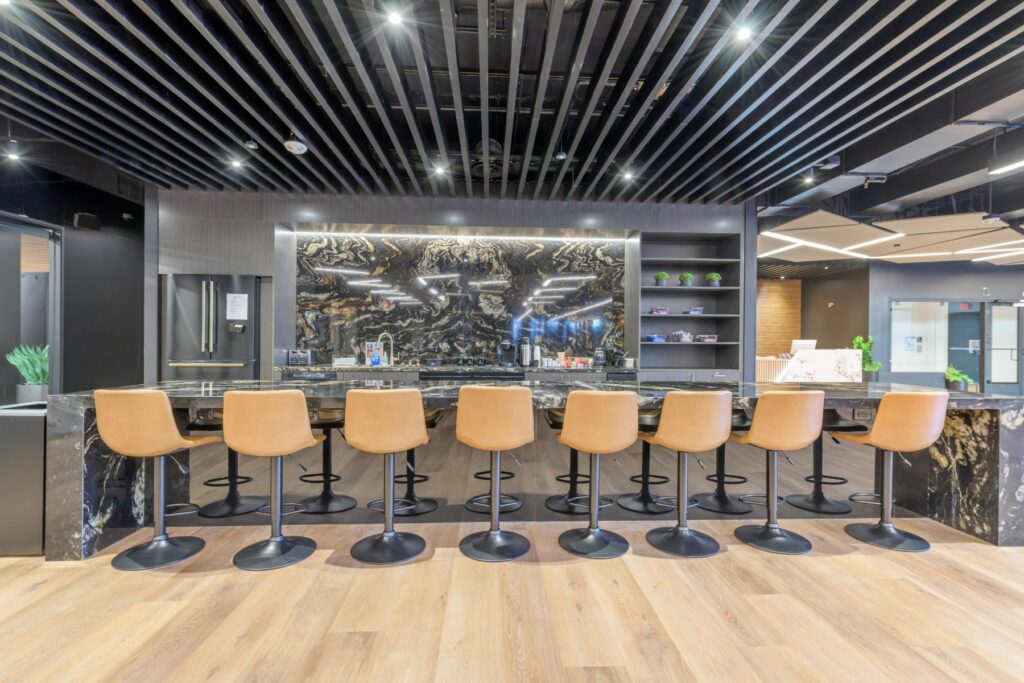
Access is the foundation, because every other service starts with knowing who someone is. Smart access control links a person to the doors, floors and rooms they may use across the STAK Space campus.
The STAK Site App empowers over 1.2 million SF of real estate with smart access control. Once identity lives in one place, permissions can follow a person across apartments, offices and amenities. For example, a resident who also rents a desk can reach both with the same credential.
This layer also protects the property. Operators can grant, change or revoke access in seconds. Meanwhile, audit trails show who entered and when. That record supports safety, planning and the advantages STAK gives startups that build on it.
Layer Two: One App for Every Booking
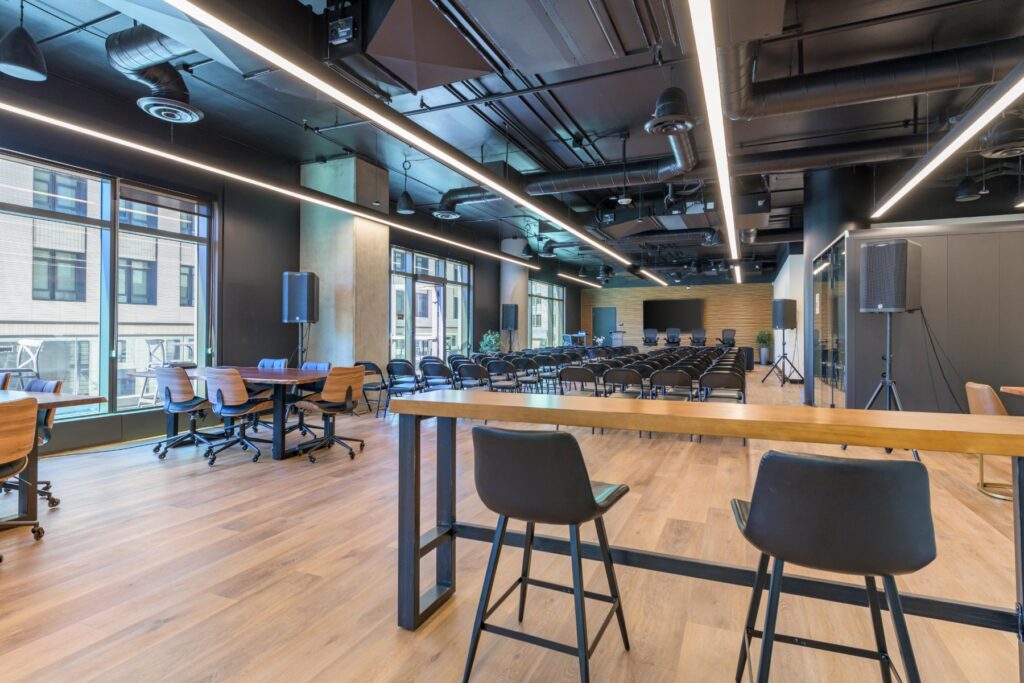
A single booking app turns a portfolio of spaces into one easy menu. When apartments, amenities, coworking and mobility share an app, people use more of what the property offers. That is integrated real estate technology at work.
At 1900 Broadway, the STAK app connects apartment, amenity, coworking and mobility bookings. Residents reserve amenity spaces through it. In addition, residents of 1900 Broadway apartments receive discounted access to the coworking floors, so living and working sit one tap apart.
For members, the payoff is simplicity. For operators, it is insight. Every booking shows demand by hour, room and user type. As a result, the team can shape space around real behavior rather than guesses, including the event center listed on STAK upcoming events.
Building a product for access, booking, mobility or building intelligence? The accelerator gives founders capital, technology integrations and premium workspace across three Uptown Oakland hubs.
Layers Three and Four: Mobility and AI
Mobility and AI extend the building beyond its walls and beyond business hours. The Go layer covers parking, BART access, car share, EV fleet access and robotaxi access. Therefore, a trip becomes part of the same experience as a desk booking. The STAK Accelerator backs mobility founders who want to test this layer.
Location helps. 1900 Broadway sits on the 19th St./Oakland BART station, so transit is a core feature rather than an afterthought. Meanwhile, parking and car share can appear in the same app that opens the door.
AI then makes the whole stack responsive. The STAK Site App includes AI-powered chatbots and customized AI applications for operations. For example, a chatbot can answer routine questions at any hour, while staff focus on complex requests. Operators should still govern these tools with care, and the NIST AI Risk Management Framework offers a useful reference.
Layer Five: Data That Ties It Together
Data is the layer that turns separate tools into a learning system. When access, bookings, mobility and AI share data, patterns emerge that no single tool can see. That is why the STAK Ventures thesis favors ecosystems.
For instance, booking data can show which rooms sit idle, while access data shows actual arrival times. Together, they guide decisions about layout, staffing and amenities. Energy data adds another dimension, and the ENERGY STAR benchmarking tools help owners compare building performance over time.
Finally, good data practice builds trust. Collect only what serves the experience, explain how you use it and protect it well. Integrated real estate technology earns its value only when people feel safe inside it.
Next step: build inside the stack
The strongest proptech products plug into a real, working ecosystem. The STAK Accelerator offers founders access to capital, technology integrations and premium workspaces at 1900 Broadway, 1950 Franklin and 415 20th. If your product strengthens any layer of the stack, this is where to prove it.
Frequently asked questions
What is integrated real estate technology?
It is a connected set of systems, such as access, booking, mobility, AI and data, that work as one. The goal is a seamless experience for people and a single source of truth for operators.
Do I need to replace every system to integrate?
No. Most properties adopt integrated real estate technology in stages, starting with access and identity, and the STAK Accelerator helps founders plan for that phased reality. Then they connect booking and data. Each step adds value on its own, so the work does not require one large overhaul.
How do startups fit into an integrated stack?
Startups supply many of the layers, from smart building sensors to community platforms. The startup advantages at STAK include technology integrations, which help founders test products inside a live ecosystem.
Is joining the accelerator a big commitment for an early product?
It depends on your stage and goals. The accelerator focuses on capital, integrations and workspace, so review the program details and decide whether a live testbed fits your current roadmap.
