

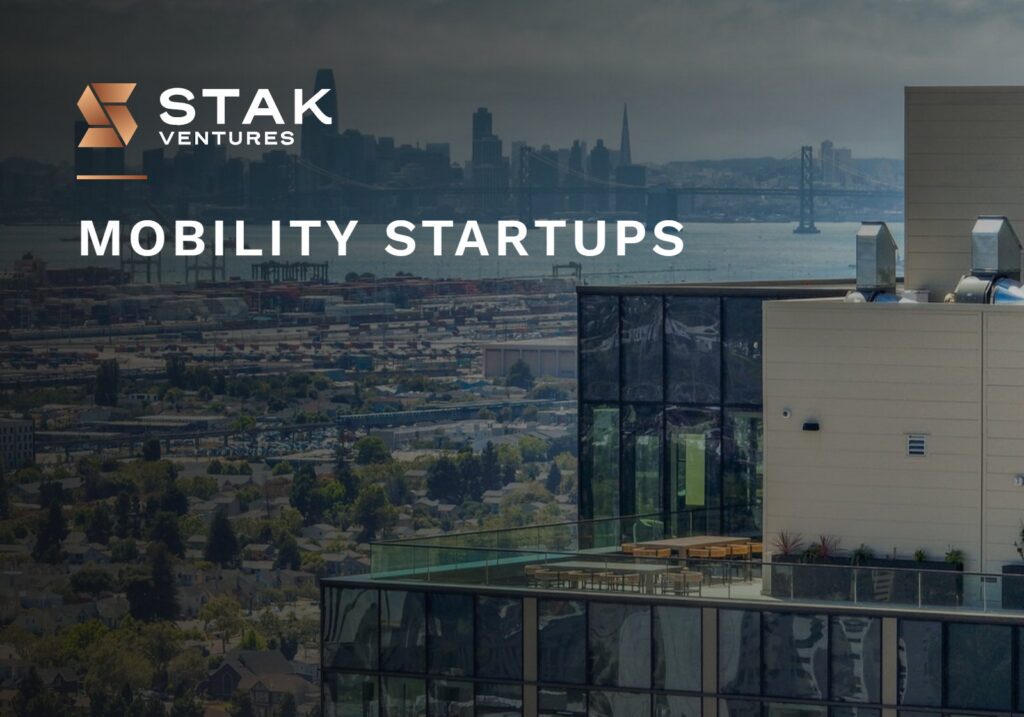
A mobility founder can model trips on a laptop for months. Then the first real rider shows up in the rain, the garage gate does not open, and the ride share pickup point is on the wrong street. Mobility startups succeed or fail at that curb, which is why location matters so much.
Mobility startups grow faster in transit-rich locations because those places concentrate riders, vehicles, parking and real data. A building on a rail station with parking, car share and EV fleet access becomes a live testbed. As a result, founders can validate products with real trips instead of assumptions.
Key takeaways
- Transit-rich locations give mobility startups real riders and real constraints.
- Parking, car share, EV fleets and rail work best as one connected system.
- Integrated buildings let founders test access, booking and payments together.
- STAK Mobility is part of the portfolio access available through STAK Ventures.
Why location shapes mobility startups

Location shapes mobility startups because every product ultimately runs on real streets, curbs and stations. A transit-rich site offers dense demand, varied trip types and frequent edge cases. Therefore, founders learn faster than they would in a low-density setting.
Uptown Oakland is a strong example. The 19th St./Oakland BART station lists its address as 1900 Broadway, in Uptown near the Paramount Theatre. In addition, the station connects riders to San Francisco and the wider East Bay.
That kind of node creates first-mile and last-mile questions every day. For instance, how does a commuter get from the platform to a desk, a garage or a shared car? Mobility startups that answer those questions well earn real users.
Density also brings variety. Commuters, residents, event guests and delivery drivers all compete for the same curb. As a result, a product that works here has already faced most of the hard cases.
The Go pillar: parking, car share and EV fleets

The Go pillar treats mobility as a building amenity rather than a separate service. At STAK, Go spans parking, BART access, car share, EV fleet access and robotaxi access. As a result, transportation becomes part of the address.
This approach opens doors for founders. Parking can become app-based access rather than a ticket machine. Similarly, car share and EV fleets can tie into the same account a resident uses to book an amenity. STAK Ventures describes this as part of a Full Stack Real Estate platform.
Portfolio access through STAK Ventures includes STAK Mobility, which covers connected transit and parking. Therefore, mobility startups can study how these services fit together inside an operating ecosystem.
Building a parking, fleet or transit product? The STAK Accelerator offers capital, integrations and a campus on top of BART.
Integration is the real product

Integration is where mobility startups create lasting value, because riders want one seamless journey. The STAK app at 1900 Broadway connects apartment, amenity, coworking and mobility bookings. Consequently, a trip can start from the same place a resident books a room.
Behind the scenes, the STAK Site App empowers over 1.2 million square feet of real estate with smart access control and AI tools for operations. For example, access control and mobility booking can work together so a reserved vehicle or garage space is ready on arrival.
Founders should therefore build with open integration in mind. A mobility product that plugs into access, payments and booking systems is far easier for owners to adopt. The STAK Accelerator offers technology integrations alongside capital and workspace.
Testing mobility startups in a live campus

A live campus gives mobility startups something no simulator can: real people with real schedules. Residents, coworking members and event guests all move through the same blocks. Meanwhile, each group has different needs, from daily commutes to one-time visits.
The STAK Accelerator spans three Uptown Oakland hubs at 1900 Broadway, 1950 Franklin and 415 20th. In addition, the STAK Space coworking floors give teams a base within walking distance of transit and parking.
Public agencies also study these patterns. BART explains its approach to transit-oriented development, which helps founders understand why density near stations matters. Finally, that context makes product decisions easier to defend with owners and investors.
What investors ask mobility founders
Investors ask mobility founders to prove demand, unit economics and partner fit in real settings. A polished demo is not enough. Therefore, bring evidence from actual trips, actual garages and actual buildings.
Expect questions about who pays. For instance, is the buyer a building owner, a fleet operator, a city or the rider? Each answer implies a different sales cycle and a different set of risks. In addition, investors will ask how the product handles safety, access and data privacy.
Partnerships also carry weight. A pilot with an owner that controls parking, access and resident relationships shows that the product can be deployed. Finally, a clear path from pilot to contract tells investors the company can grow beyond one site.
Next step: test where riders are
Mobility startups need real trips, real curbs and real partners. The STAK Accelerator gives founders access to capital, technology integrations and premium workspaces across three Uptown Oakland hubs. Therefore, it is a practical place to prove a mobility product in a transit-rich setting.
Frequently asked questions
Why should mobility startups care about building owners?
Owners control parking, curbs, access systems and resident relationships. Products that fit owner operations are far easier to deploy and scale.
Does STAK work with car share and EV fleets?
The STAK Go pillar includes car share, EV fleet access, parking, BART access and robotaxi access as part of an integrated real estate offering.
Is a transit-rich location worth the higher cost?
It depends on your product. If you need frequent real-world trips and partner meetings, proximity to transit can save time and speed learning, so weigh that against your budget.
What kind of mobility startups fit the STAK Accelerator?
Startups in Mobility and Transportation Solutions, Smart Building Systems and Full-Stack Ecosystem Enablers align with STAK Ventures focus areas. Review the program to see whether its integrations and hubs match your plans.
