

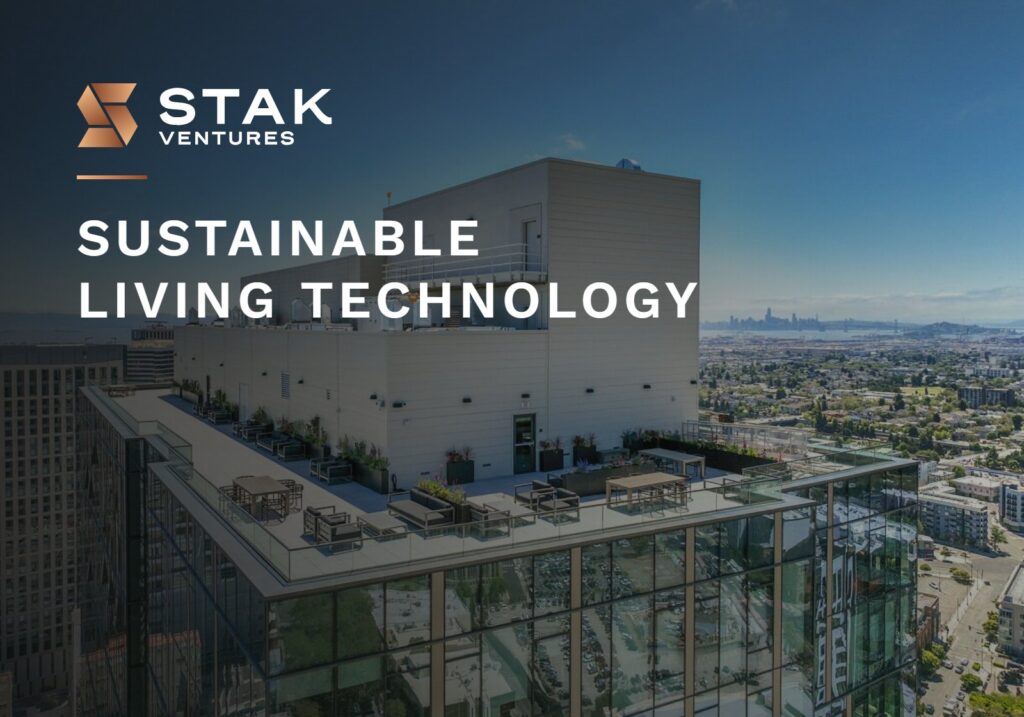
A building can look modern from the street and still waste energy, water and time every hour of the day. Owners know it, residents feel it, and investors see the gap. Sustainable living technology closes that gap when it saves resources without asking people to change everything about how they live.
Investors fund sustainable living technology that delivers measurable savings inside real buildings. The strongest companies target energy, water, waste or mobility, integrate with existing systems and prove results with clear data. Sustainable Living Technologies is one of the six focus areas for STAK Ventures, alongside PropTech, mobility and smart building systems.
Key takeaways
- Investors favor products that reduce resource use and operating cost at the same time.
- Energy, water, waste and mobility each offer distinct opportunities.
- Benchmarking data, such as ENERGY STAR Portfolio Manager, makes results credible.
- Founders win faster when they can pilot inside occupied buildings.
What makes sustainable living technology fundable
Fundable sustainable living technology pairs environmental benefit with a clear operating return. Good intentions do not close a round. Instead, investors look for a product that an owner or resident would buy even without the sustainability story. Therefore, the strongest pitches lead with cost, comfort or convenience and treat the environmental benefit as a multiplier.
In addition, investors want proof that the product fits real buildings. Installation burden, integration with existing systems and staff training all affect adoption. A product that works with the STAK Accelerator ecosystem of live buildings has a clear path to that proof.
Finally, measurement matters, and STAK Ventures asks every founder how results will be verified. If a founder cannot show before and after results, the savings remain a claim. As a result, data design belongs in the product from the first version.
Energy: the clearest path to savings
Energy remains the most measurable category of sustainable living technology. Buildings already track utility bills, so savings are easy to verify. For example, controls that reduce heating and cooling waste, or tools that shift load to lower-cost hours, produce results owners can read on a statement.
Moreover, established frameworks make the case stronger. The ENERGY STAR program for commercial buildings gives owners a common language for performance. Founders who report results in that language reduce friction in every sales conversation.
However, energy products must respect the people inside, whether they live in 1900 Broadway residences or work in an office. A system that saves power while making residents uncomfortable will be overridden. Consequently, comfort data should sit beside energy data in every pilot.
Water, waste and the overlooked categories

Water and waste offer room for founders because fewer companies serve them well. Leak detection, usage visibility and smarter irrigation can prevent costly damage and reduce consumption. Similarly, waste tools that improve sorting, pickup schedules or reporting help owners meet local requirements and cut hauling costs.
These categories often lack clean data. Therefore, founders who make the data visible create value before any behavior changes. Owners can then benchmark progress using ENERGY STAR Portfolio Manager, which tracks water as well as energy.
Meanwhile, residents respond to clear feedback, which is why community features matter as much as sensors in the STAK Accelerator portfolio. A simple notice about usage often changes habits more than a lecture. Sustainable living technology works best when it makes the right choice the easy one.
Building sustainable living technology for real buildings? Test it where energy, water and mobility already connect.
Mobility as sustainable living technology

Mobility belongs in the sustainability conversation because getting around shapes a building’s footprint. The STAK ecosystem treats Go as a core pillar, with parking, BART access, car share, EV fleet access and robotaxi access. For example, 1900 Broadway sits on the 19th St./Oakland BART station, so residents and workers can skip the car for many trips.
As a result, mobility startups have a natural testbed. Tools that coordinate EV charging, shared vehicles or parking demand can connect to the STAK app, which already links apartment, amenity, coworking and mobility bookings at 1900 Broadway residences.
In addition, mobility products produce strong usage data. That data helps founders prove adoption, which is the metric investors weigh most. The station itself is described on the 19th St./Oakland BART page, and its location gives mobility pilots a steady flow of real riders.
Why integrated ecosystems accelerate adoption
Sustainable products scale faster when they plug into a connected building platform. STAK Ventures believes ecosystems are more valuable than products. A single device saves a little. However, a connected system that links access, operations, mobility and resident engagement can coordinate savings across the whole property.
The STAK Site App empowers over 1.2 million square feet of real estate with smart access control, AI-powered chatbots and customized AI applications for operations. Therefore, founders can often integrate with an existing layer rather than build a parallel one. Explore the advantages STAK offers startups to see how that works in practice.
Next step: prove your product in live buildings
Sustainable living technology earns investment when it proves savings in occupied space. The STAK Accelerator gives founders access to capital, technology integrations and premium workspaces across three Uptown Oakland hubs: 1900 Broadway, 1950 Franklin and 415 20th.
Then bring a clear metric, a realistic pilot scope and a product that makes sustainable choices easier for the people who use it. You can also work from STAK Space coworking while you build.
Frequently asked questions
What counts as sustainable living technology?
It includes products that reduce energy, water or waste in places where people live and work, plus mobility tools that cut the need for private car trips.
Do I need ENERGY STAR certification to pitch STAK Ventures?
No. However, reporting results in recognized frameworks such as ENERGY STAR Portfolio Manager makes your data easier for owners and investors to trust.
Is my product a fit if it is still pre-revenue?
It can be. STAK Ventures reviews companies from Pre-Seed onward, and a strong pilot plan matters more than early revenue for many sustainability products.
How long should a sustainability pilot run?
Long enough to capture meaningful usage and, for energy, seasonal variation. Agree on the duration and metrics with the owner before installation.
