

A proptech founder lands a promising pilot, then waits months while the developer, owner and property manager each weigh in. By the time everyone agrees, the budget has moved. A vertically integrated real estate platform removes that maze, because one organization controls the decisions from groundbreaking to daily operations.
Vertically integrated real estate means one platform develops, owns and operates its properties. For founders, that structure matters. Decisions move faster because fewer parties must agree. Pilots run in real buildings with real users. As a result, startups learn sooner and prove value with evidence instead of slides.
Key takeaways
- Vertical integration joins development, ownership and operations under one platform.
- Fewer decision makers mean faster pilots and clearer feedback for startups.
- Behring Capital is a vertically integrated platform, and STAK Ventures is its venture and technology arm.
- Founders gain live testbeds across Live, Work, Play and Go spaces.
What Vertically Integrated Real Estate Means

A vertically integrated real estate company handles every stage of a property’s life itself. It develops the site, owns the asset and runs daily operations. Therefore, the same organization sees the full picture.
In a fragmented model, each stage belongs to a different firm. Developers move on after completion. Owners focus on returns, while managers focus on tenants. Meanwhile, technology decisions fall between the cracks, a gap the STAK Accelerator is built to close.
Behring Capital takes the integrated path. It is a vertically integrated real estate development and investment platform, and STAK Ventures serves as its venture and technology investment arm.
The model also shapes long-term thinking. Because the same platform keeps the asset, it gains from systems that last. Therefore, vertically integrated real estate firms tend to invest in technology that pays off over years. Founders can explore that mindset through STAK startup advantages.
Faster Decisions for Founders

Integration speeds decisions because fewer stakeholders must sign off. When one platform owns and operates the building, a pilot needs one clear yes rather than several.
That speed changes how founders work. For example, a smart building startup can agree on scope, install and gather data while a fragmented deal is still in review. In addition, feedback flows directly from the people who run STAK Space coworking.
Speed does not mean shortcuts. Founders still need clear goals, safety reviews and success metrics. However, the path from idea to test becomes shorter. The STAK Accelerator builds on this advantage for founders across three Uptown Oakland hubs.
This matters most for products that need physical installation. Sensors, access hardware and EV charging all need building approval. In a vertically integrated real estate setting, those approvals sit with one team. As a result, founders who rent STAK Space offices can walk down the hall to discuss a test.
Real Buildings as Real Pilots
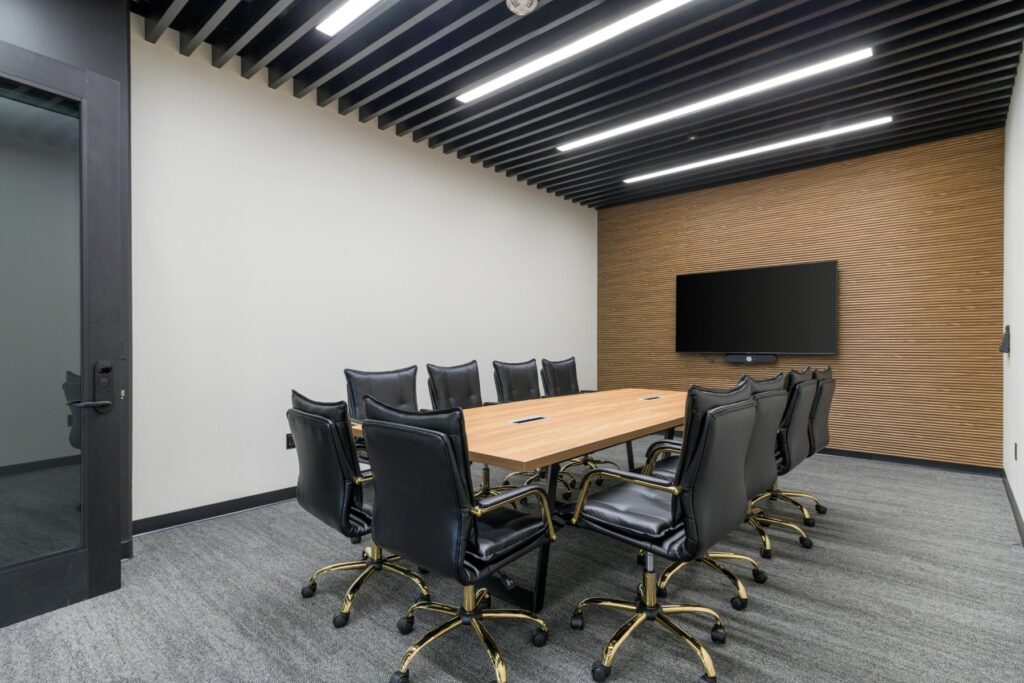
Integrated platforms offer live testbeds, which give founders evidence instead of assumptions. STAK spans Live, Work, Play and Go, so products can meet residents, members and commuters in one ecosystem.
Consider the range. 1900 Broadway residences provide the Live layer. Over 50,000 sq ft of coworking on floors 2 and 3 supports Work. Meanwhile, the building sits on the 19th St./Oakland BART station, which anchors the Go layer.
As a result, a mobility tool, a booking platform or an energy product can be tested where people actually live and work. That evidence carries weight with customers and investors alike.
Transit makes the testbed richer still. The 19th St./Oakland BART station connects the campus to the wider Bay Area. Therefore, mobility founders can study real commuter behavior beside the residences and offices they serve.
Building proptech, mobility or smart building technology? The accelerator connects founders with capital, technology integrations and premium workspace inside an integrated ecosystem.
The Ecosystem Advantage
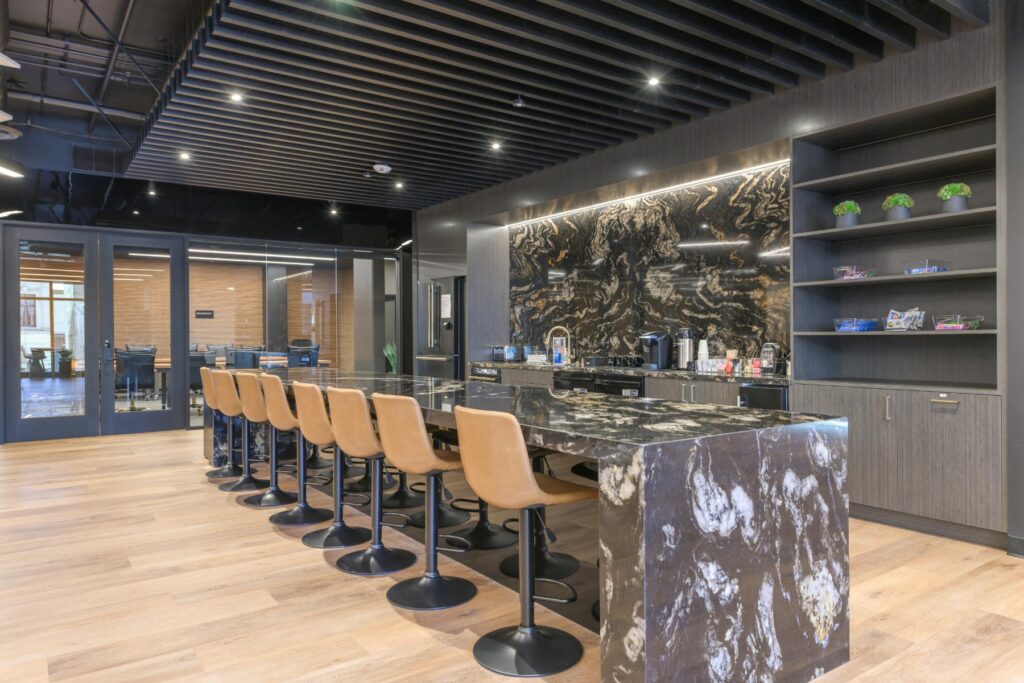
Vertical integration makes an ecosystem possible, and ecosystems are more valuable than products. That thesis guides STAK Ventures. One app at 1900 Broadway connects apartment, amenity, coworking and mobility bookings.
Integration also supports shared technology. The STAK Site App empowers over 1.2 million SF of real estate with smart access control, AI-powered chatbots and customized AI applications for operations. Therefore, a new product can plug into existing systems rather than starting alone.
For sustainability founders, owners also track building performance with tools such as ENERGY STAR benchmarking. Integrated operators can share that baseline, so pilots measure real change.
This connected base is what sets vertically integrated real estate apart for startups. Instead of selling to many separate owners, a founder can prove value once inside a full ecosystem. Founders can also meet the operators at STAK founder events before proposing a pilot.
What Founders Should Bring
Founders get the most from integrated partners when they arrive with a focused pilot plan. Define the problem, the users, the timeline and the metrics before the first meeting, and bring them to STAK founder events for early feedback.
Next, fit the plan to the focus areas: real estate technology, mobility and transportation, smart building systems, community platforms, sustainable living technologies and full-stack ecosystem enablers. Finally, plan for scale. A pilot in one building should show how the product could serve a full portfolio. The advantages STAK offers startups describe the support available along the way.
Above all, bring humility and speed. Operators value founders who listen, adapt and report results honestly. Teams that want structured support can also look at the STAK Accelerator program, which pairs capital with technology integrations.
Next step: pilot inside an integrated platform
Vertically integrated real estate gives founders the rare combination of speed and real users. The STAK Accelerator offers access to capital, technology integrations and premium workspaces at 1900 Broadway, 1950 Franklin and 415 20th. Explore the program and see whether your product fits the stack.
Frequently asked questions
What is vertically integrated real estate?
It is a model in which one company develops, owns and operates its properties. That control lets it coordinate design, technology and service across the full life of a building.
Why does vertical integration help startups?
Fewer decision makers mean faster pilots and direct feedback. Startups also gain access to real users across 1900 Broadway residences, offices, amenities and mobility.
Does a pilot with an integrated owner guarantee a contract?
No. A pilot is a test, and results decide what comes next. Set clear success metrics up front, so both sides can judge the outcome fairly. Office space at STAK Space can help teams stay close to the pilot.
Is my startup too early for the accelerator?
Fit depends on your product and focus area more than a fixed stage. Review the program and the focus areas, then decide whether a live testbed matches your roadmap.
